

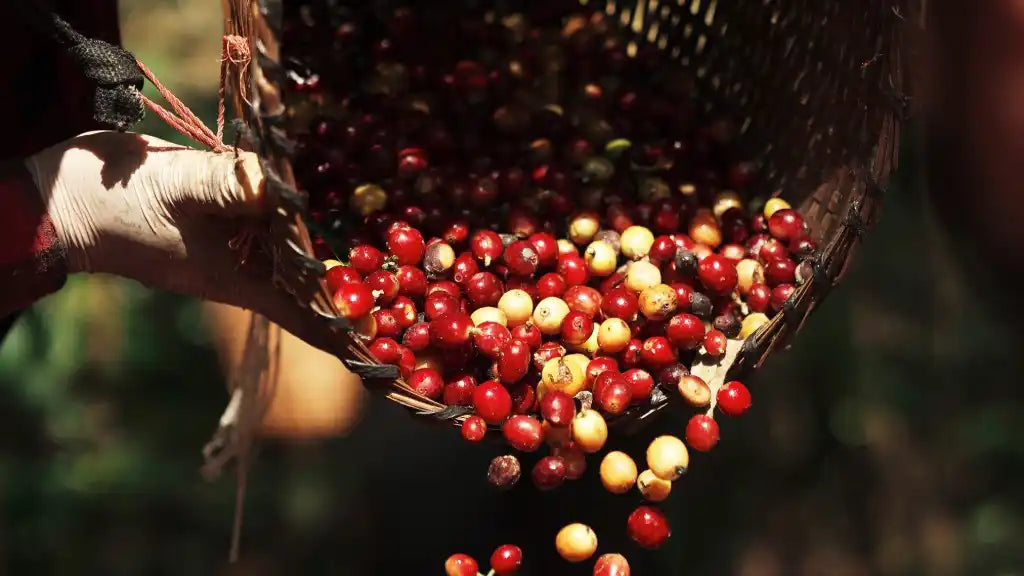
Harvesting coffee for the best results
A lot goes into harvesting coffee. Timing the perfectly ripened coffee cherries. Lining up labour to take in the harvest. Watching the weather. Keeping an eye on coffee prices. It is a highly stressful time for the grower.
When is coffee harvested?
Annual harvesting happens over a few months at different times, depending on where the coffee crop is grown. Roughly speaking the harvesting time corresponds with winter - October through to March in the northern hemisphere, and March through to July in the southern hemisphere. The closer the area is to the equatorial zone, the longer the harvest period.
In Mexico and Nicaragua, crops are harvested from October to March. In the region of Kilimanjaro in Tanzania, harvest is from July to November, in Rwanda it is March to July and in Uganda, it runs from October to February. All our coffees are grown at higher altitudes where temperatures are cooler. In the coffee world, these are known as Strictly High Grown (SHG) coffees, because the altitude slows down the coffee cherry maturation, making the harvest window later - but this also allows complex sugars to develop, which improve the taste.
Weather patterns can influence the harvest. Coffee trees flower in response to rainfall, so it is needed for them to bear fruit around six to eight months later. Heavy rainfall at harvest can disrupt the work. Droughts stress the plants and reduce flowering and in turn, the coffee cherries.
Coffee growers are looking for the perfect harvest time. They check the cherries for ripeness through colour, firmness and brix level (sugar level). It’s a lot like harvesting grapes for wine!
How is coffee harvested?
There are three main ways that coffee is harvested: hand picking, strip picking and mechanical harvesting.
Selective hand picking - this is where growers pick only the ripe red cherries by hand. They check the trees and return to the same trees every 8-10 days (or more) to gather the next batch of ripe fruit. This method yields the highest quality of coffee cherry but it is labour intensive and costs more to harvest.
Strip picking - the grower picks all the cherries, by hand or with hand tools, both ripe and under-ripe in one sweep. This means they have to be sorted later and graded. Lower quality cherries are then sold separately to be made into instant coffee, commercial blends and espresso powders.
Mechanical harvesting - this is typically done on large scale farms in countries like Brazil. The harvesters straddle the coffee plants and take the cherries off on both sides. It is cheap, but not selective.
Picking is just the first step. Coffee cherries need to be sorted, processed, dried and milled before they can be packed for sale.
What is harvesting like for the coffee grower?
Harvesting coffee for a small scale grower, like the ones we work with at Source Climate Change Coffee, is hard work. It requires very long days, beginning before sunrise and often lasting twelve hours or more.
Small growers often pull in the family to harvest coffee and they often rely on the sale of this coffee to see them through the entire year for food, clothing, and schooling.
Related post
30
Sep
12
Aug
06
Jul

04
Jun

13
May
RECENT POSTS